

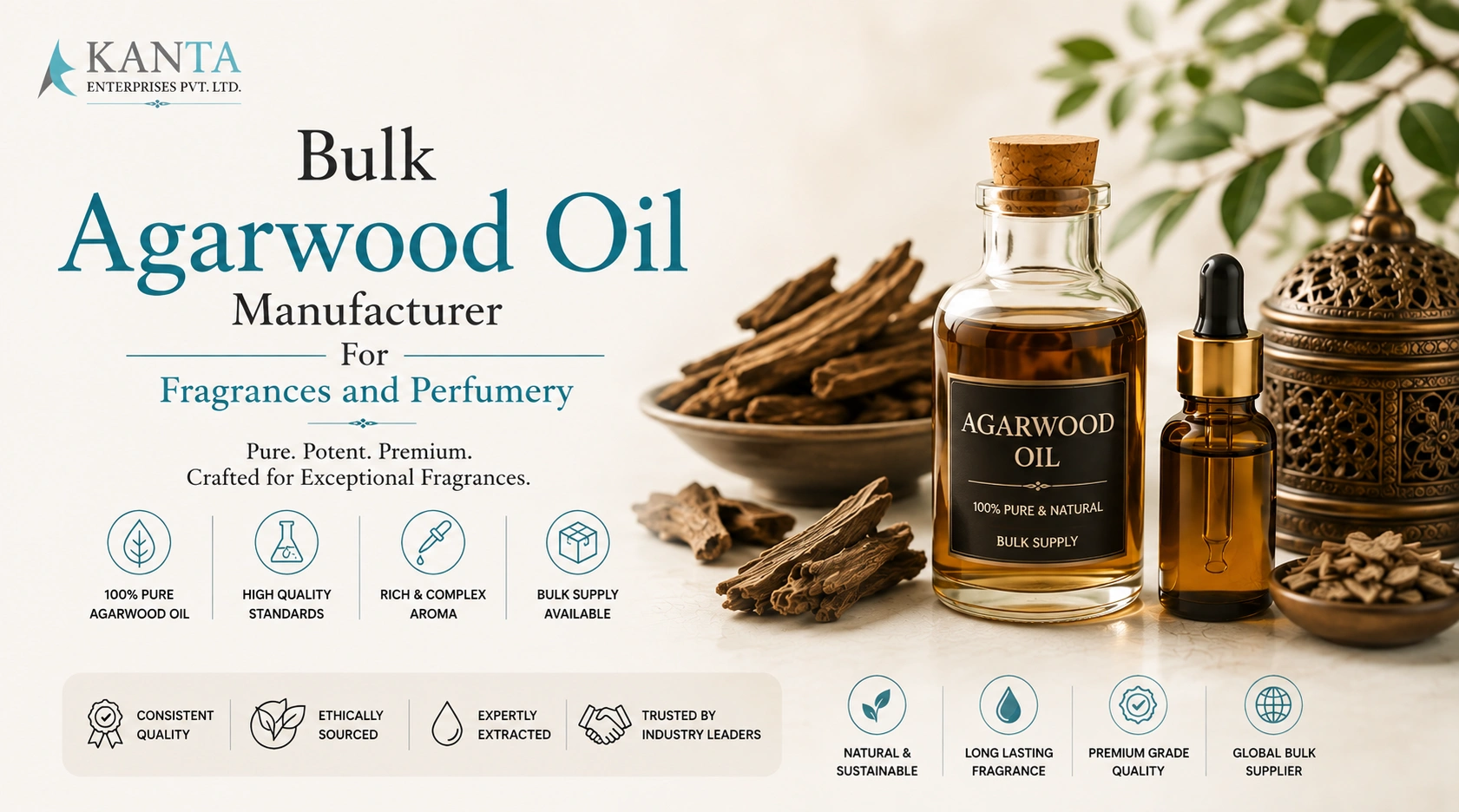
Agarwood Oil, also known as Oud/Oudh is a rare, complex, and expensive raw material used in the fragrance industry. It’s rare, complex, and central to many luxury perfumes and essential oil blends. Brands searching for pure agarwood oil for perfumes need a manufacturer who can guarantee both consistency and authenticity. Finding the right agarwood oil manufacturer is essential if you want a consistent, high-quality supply for your brand.
This guide covers what agarwood oil is, why sourcing matters so much, and what to check before choosing a manufacturer to work with.
What Is Agarwood Oil and Why It’s So Valuable
Agarwood oil is extracted from the resin-infused heartwood of the Aquilaria tree. The resin forms naturally over years, often in response to specific environmental conditions, which makes genuine agarwood both rare and time-intensive to produce.
Because of this scarcity, agarwood oil is one of the most expensive natural ingredients used in perfumery. Its deep, complex aroma makes it a signature note in many high-end perfumes and blended essential oil products.
This combination of rarity, extraction difficulty, and aromatic depth is exactly why sourcing decisions matter so much. Even small differences in raw material quality can noticeably change how the finished oil performs in a fragrance blend.
Why Choose an Agarwood Oil Manufacturer Based in India
India has a long-standing connection to agarwood, both through cultivation and traditional distillation practices. This makes it a practical sourcing destination for perfume and essential oil brands looking for an experienced agarwood oil manufacturer in India.
Access to Cultivated Agarwood
Many regions in India cultivate Aquilaria trees specifically for oil production. This gives manufacturers a steadier raw material supply compared to relying solely on wild-harvested sources.
Traditional Distillation Expertise
Extracting agarwood oil requires patience and skill. An experienced oud oil manufacturer in India often combines traditional hydro-distillation methods with modern equipment to preserve the oil’s natural complexity.
Competitive Pricing for Bulk Buyers
Given India’s production scale and lower manufacturing costs, brands can often source agarwood oil more affordably than through smaller, boutique suppliers elsewhere.
Experience with International Export
Established manufacturers understand the documentation and shipping requirements involved in exporting a high-value ingredient like agarwood oil, which reduces friction for overseas buyers.
What to Check Before Choosing an Oud Oil Supplier
Because agarwood oil is expensive and often diluted or adulterated by less scrupulous suppliers, careful vetting matters more here than with many other ingredients.
Ask About Extraction Method
Hydro-distillation is the traditional method used for agarwood oil. Ask how long the distillation process takes, since shorter, rushed processes can affect the oil’s depth and quality.
Request Purity Documentation
A reliable manufacturer should provide a Certificate of Analysis (CoA) confirming the oil’s composition. This is especially important given how frequently diluted agarwood oil appears on the market.
Understand Grading and Sourcing
Agarwood oil quality varies significantly based on the tree’s age, resin content, and origin. Ask the manufacturer to explain their grading system so you know what you’re actually purchasing.
Confirm Minimum Order Quantities
Because agarwood oil is sold in smaller volumes than most essential oils, ask any bulk agarwood oil supplier about minimum order quantities upfront. This helps you plan your budget accurately before committing.
Check for Consistency Across Batches
Ask how the manufacturer maintains consistency between batches, since natural variation in raw agarwood can otherwise lead to noticeable differences in the final oil.
Verify Ethical and Legal Sourcing
Agarwood is a regulated species in many regions due to overharvesting concerns in the wild. Ask whether the manufacturer sources from cultivated plantations and follows applicable trade regulations. This protects your brand from supply chain and compliance issues later.
Understanding Agarwood Oil Grades
Not all agarwood oil is created equal, and price alone doesn’t always indicate quality. Manufacturers typically classify oil based on factors such as the tree’s age, resin density, and region of origin.
Higher-grade oils tend to have a deeper, more layered aroma and a higher price point. Lower grades can still be useful for certain blends but may lack the same complexity. Asking your supplier to explain their grading terminology helps you choose an oil that matches your formulation goals and budget.
Some manufacturers also differentiate oils by region of origin, since agarwood from different growing areas can carry distinct aromatic characteristics. Discussing these differences with your supplier can help you select an oil that fits the specific character you want your fragrance to carry.
Uses of Agarwood Oil in Perfume and Essential Oil Brands
Agarwood essential oil is valued across several segments of the fragrance industry, including:
- Luxury perfumery – Used as a base or signature note in premium fragrance blends.
- Attar and oil-based perfumes – A key ingredient in traditional Middle Eastern and South Asian perfumery.
- Aromatherapy blends – Combined with other oils for its distinctive, woody character.
- Niche and artisanal fragrance lines – Popular among brands seeking a rare, distinctive signature scent.
- Incense and home fragrance products – Used to create warm, woody scent profiles.
Because agarwood oil is so concentrated, most formulations use it in very small quantities alongside other carrier or base ingredients.
Natural Agarwood Oil vs. Synthetic Oud
Many perfume brands also use synthetic oud as a more affordable alternative to natural agarwood oil. Synthetic versions can mimic certain notes of the scent but typically lack the same depth and complexity.
Brands positioning themselves as premium or natural often prefer genuine agarwood oil despite the higher cost. If cost is a major constraint, some manufacturers offer blended options that combine a smaller amount of natural oil with synthetic or carrier components, giving brands more flexibility in pricing their final product. Buyers looking for wholesale oud oil at a lower price point should ask specifically about these blended formulations.
How Kanta Essential Oils Supports Agarwood Oil Buyers
Kanta Essential Oils works with perfume and essential oil brands looking for a reliable oud oil supplier in India. Buyers can request batch documentation, ask about sourcing and grading, and discuss order quantities suited to their formulation needs.
Working directly with a manufacturer like Kanta Essential Oils also makes it easier to build a long-term sourcing relationship, particularly valuable for an ingredient as rare and variable as agarwood oil.
How to Store Agarwood Oil Properly
Because agarwood oil is expensive and sensitive to environmental conditions, proper storage matters. Keep it in a dark glass bottle, away from direct sunlight and heat, to help preserve its aroma over time.
Avoid frequent temperature changes and always keep the bottle tightly sealed between uses. Ask your manufacturer for specific storage recommendations, since these can vary slightly depending on the oil’s grade and dilution.
Common Mistakes to Avoid When Sourcing Agarwood Oil
Even experienced buyers can run into avoidable issues when purchasing agarwood oil. Being aware of these common pitfalls can save you time, money, and formulation headaches.
- Buying without documentation: Always request a Certificate of Analysis before committing to a purchase.
- Ignoring grading differences: Assuming all agarwood oil is the same can lead to mismatched expectations.
- Choosing price over transparency: Unusually low prices often signal dilution or lower-grade material.
- Skipping small trial orders: Test a smaller quantity before placing a large bulk order.
- Not asking about extraction time: Rushed distillation can noticeably affect the final aroma profile.
Conclusion
Sourcing from the right agarwood oil manufacturer takes more care than most other fragrance ingredients, given how rare and easily adulterated agarwood oil can be. Checking extraction methods, purity documentation, grading systems, and batch consistency helps you avoid costly mistakes.
Manufacturers such as Kanta Essential Oils offer perfume and essential oil brands a transparent way to source this valuable ingredient directly from India. Sourcing agarwood oil for perfume brands doesn’t have to be complicated once you know what to check for. If you’re formulating a new fragrance line, take the time to vet your supplier carefully before placing your first order, and don’t hesitate to ask detailed questions about grading, extraction, and documentation along the way.
Frequently Asked Questions
1. What is the difference between agarwood oil and oud oil?
Agarwood oil and oud oil generally refer to the same product, extracted from the resin-infused heartwood of the Aquilaria tree. The terms are often used interchangeably in the fragrance industry.
2. Why is agarwood oil so expensive?
Agarwood oil is expensive because genuine resin formation takes years, the extraction process is time-intensive, and usable raw material yields are relatively low.
3. How can I check if agarwood oil is pure?
Requesting a Certificate of Analysis from the manufacturer is one of the most reliable ways to confirm an oil’s composition before purchase.
4. What is the minimum order quantity for agarwood oil?
This varies by manufacturer and is typically smaller than standard essential oils due to the ingredient’s high cost. Confirm details directly with your supplier.
5. Can agarwood oil be used alongside other essential oils?
Yes, agarwood oil is often blended with other essential or carrier oils in small quantities to create complex, layered fragrance profiles.
